
If you’re planning an outdoor kitchen in Naples, FL, you’ll need a design‑build team that balances functional workflow with coastal durability and hurricane code compliance. You’ll want a clear site assessment, corrosion‑resistant materials, and a single point of accountability for permits and inspections. Expect specific appliance and anchoring choices for salt air and high winds — and a realistic budget and timeline — but there’s more to weigh before you sign a contract outdoor kitchen contractors Naples.
What an Outdoor Kitchen Design‑Build Service Actually Does in Naples, FL
When you hire an outdoor kitchen design‑build team in Naples, FL, they handle the full project lifecycle—from site assessment and permitting through construction, systems integration, and final inspection—so you’re contracting one accountable entity rather than coordinating multiple vendors.
You’ll get measured site planning that maximizes space utilization, documented code compliance, engineered utility routing, and material selection that balances durability with aesthetic appeal for maintainable, inspected installations.
How Coastal Climate and Hurricane Rules Affect Design Choices
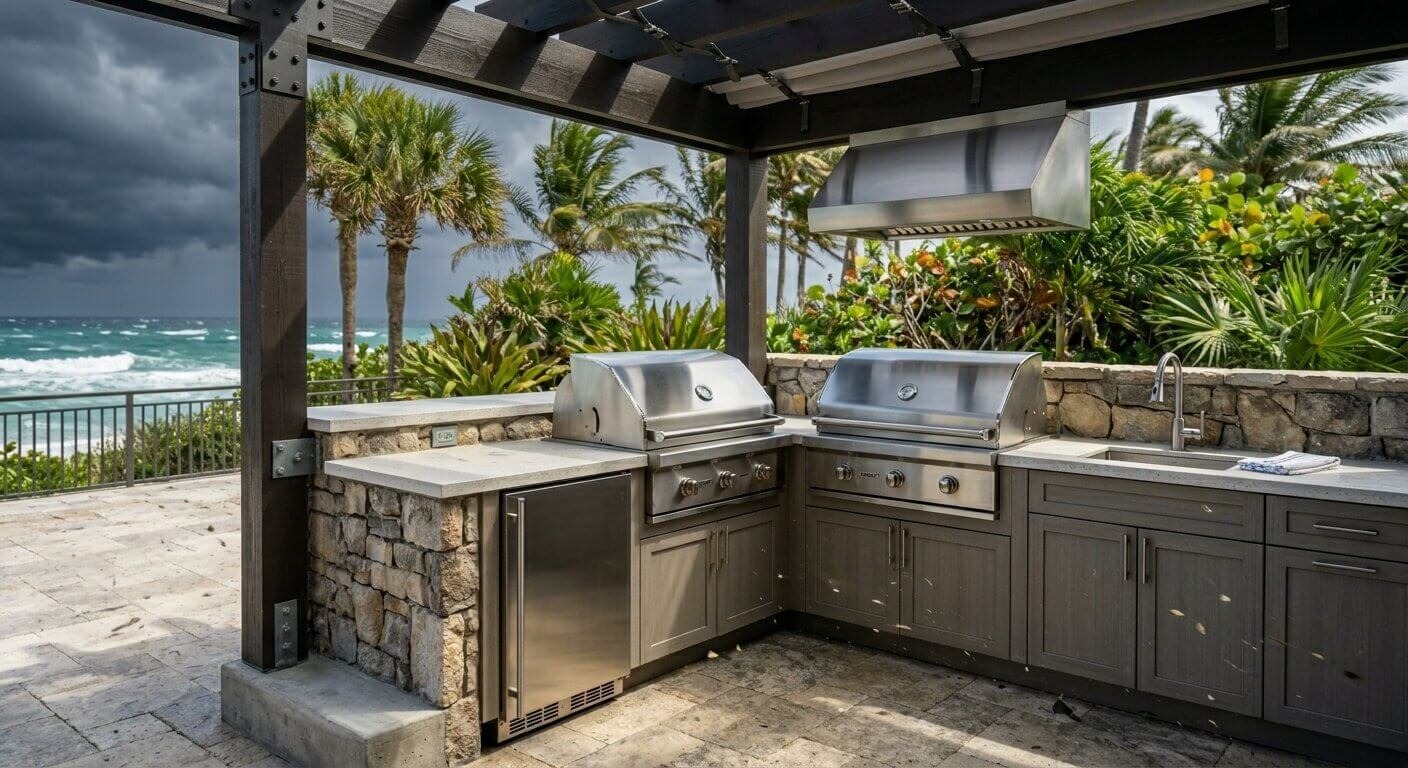
You’ll need to specify corrosion-resistant materials like marine-grade stainless steel and powder-coated aluminum to withstand salt spray and high humidity.
You should also plan for hurricane-grade anchoring and embedment that meet local code wind-load and uplift requirements.
Together those choices protect equipment longevity and ensure your design will pass permitting and post-storm inspections.
Corrosion-Resistant Materials
A coastal outdoor kitchen demands materials that resist salt spray, humidity, and high winds, so you’ll specify metals, finishes, and fasteners rated for marine environments and compliant with local hurricane codes.
Use stainless steel and weather resistant finishes; select coatings and sacrificial anodes per code.
1. Marine-grade metals
2. Corrosion-resistant coatings
3. Stainless fasteners and seals
Hurricane-Grade Anchoring
Having specified marine-grade metals and corrosion-resistant fasteners, you now must address how anchoring systems perform under hurricane loads and coastal exposure.
You’ll evaluate soil profiles, embedment depths, and load-rated anchors to meet local codes and FEMA guidelines.
Prioritize hurricane preparedness with tested uplift and lateral resistance to preserve structural integrity.
Document installation details for permitting, and schedule periodic inspections.
Must-Have Components for a Durable Florida Outdoor Kitchen
Because Florida’s climate and building codes place specific demands on outdoor structures, designing a durable outdoor kitchen means prioritizing materials, finishes, and systems that resist high humidity, salt air, UV exposure, and frequent storms.
You’ll specify corrosion‑resistant stainless, sealed masonry, and storm-rated utilities.
Consider outdoor cooking workflow and kitchen layouts for code compliance.
1. Marine‑grade stainless
2. Flood‑resistant cabinets
3. UV‑stable finishes
How to Set a Realistic Budget and Cost Ranges in Naples
When planning your outdoor kitchen in Naples, start by defining scope, performance requirements, and site constraints so cost estimates reflect real regulatory and environmental demands.
You’ll need separate line items for corrosion‑resistant appliances, flood‑rated cabinetry, engineered foundations, and storm‑rated utility connections.
You should create a clear cost breakdown by line item, include contingency for coastal corrosion, and document budget considerations tied to material longevity and site preparations.
Permits, Inspections, and Code Considerations You’ll Face
After you’ve established budget line items for corrosion‑resistant appliances, flood‑rated cabinetry, and engineered foundations, you’ll face a structured permitting and inspection process that enforces coastal‑specific building codes, utility standards, and floodplain requirements.
You’ll prepare a permit application and coordinate the inspection process.
Key considerations:
1. Site elevation, flood vents, and foundation anchorage.
2. Gas, electrical, and plumbing utility tie‑ins compliance.
3. Coastal setback and hurricane‑resistant detailing.
Material and Appliance Choices That Resist Salt Air and Storms
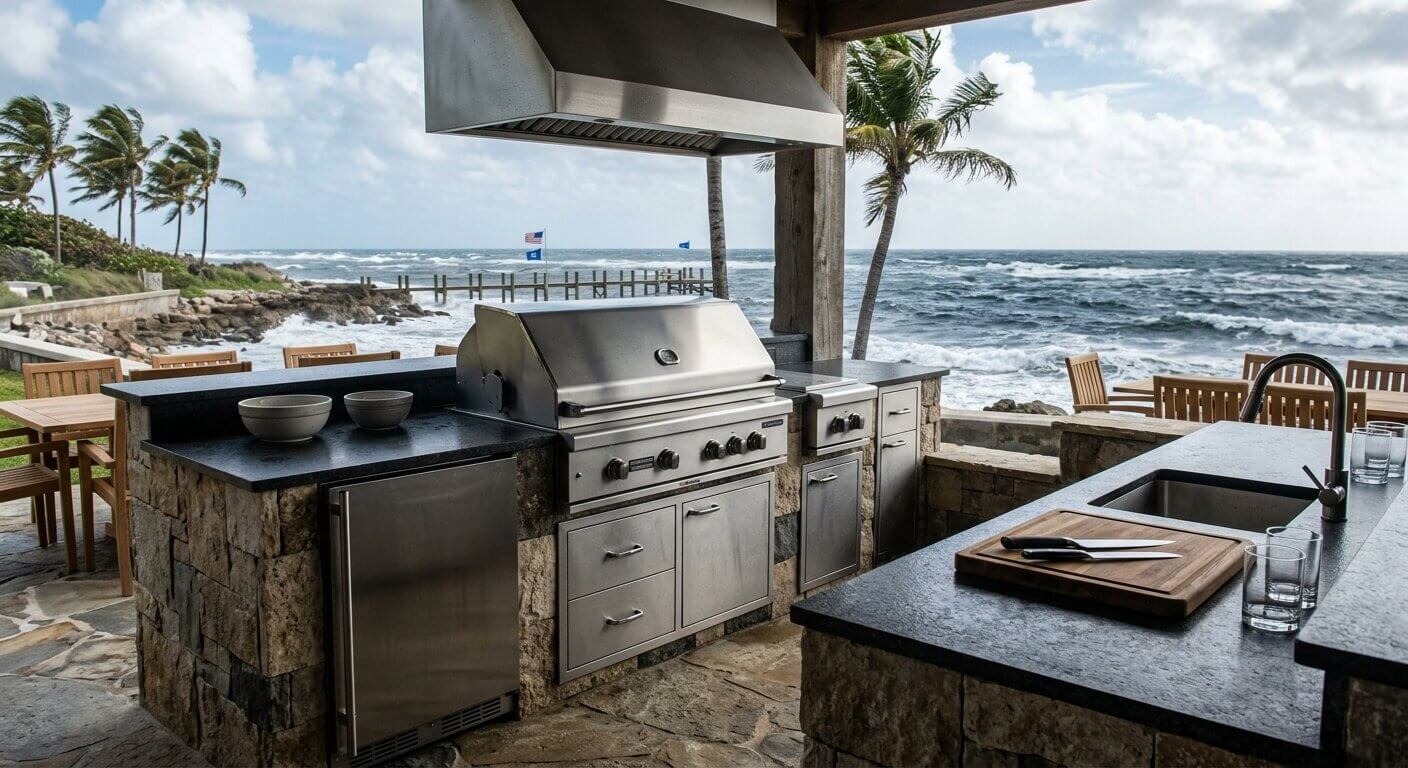
You’ll want to specify corrosion-resistant metals like 316 stainless steel or marine-grade aluminum for frames, fasteners, and grill housings to meet coastal performance expectations and local longevity standards.
Select weatherproof appliances with sealed electrical components, NEMA-rated enclosures, and UV-resistant finishes to comply with Florida Building Code recommendations for exterior equipment.
These choices reduce maintenance, help satisfy inspection criteria, and protect warranty coverage after storm events.
Corrosion-Resistant Metals
Select metals and finishes that meet coastal corrosion standards to ensure appliances and fixtures withstand Naples’ salt air and periodic storms.
You’ll specify materials per code, corrosion rates, and maintenance schedules. Choose stainless steel grades (316L) and certified aluminum alloys with anodized or powder coatings.
1. Structural framing: aluminum alloys
2. Cabinets: 316L stainless steel
3. Fasteners/coatings: marine-grade specifications
Weatherproof Appliances
Because Naples’ marine environment accelerates corrosion and electrical degradation, pick appliances rated for coastal use and specify manufacturer corrosion warranties and marine-grade electrical protections.
You should choose weatherproof grills with sealed burners, stainless alloys meeting ASTM standards, and IP-rated controls.
Pair these with all weather cabinetry fastened with corrosion-resistant anchors, and document compliance with local building codes, electrical ground-fault requirements, and hurricane anchoring protocols.
How to Evaluate and Choose the Right Naples Design‑Build Team
How do you verify a Naples design‑build team will meet code, site, and performance requirements while staying within budget?
You’ll demand documented permits, site assessments, and clear team communication and project transparency.
Evaluate qualifications, inspect past installations, and confirm insurance.
1. Verify licenses, permits, and insurance.
2. Review technical portfolios and references.
3. Require written scopes, change controls, and cost caps.
Timeline, Warranty, and Maintenance Expectations After Install
Once you’ve verified licenses, permits, and detailed scopes, set firm expectations for schedule milestones, warranty coverage, and post‑install maintenance so the project’s regulatory and performance obligations stay intact.
You’ll receive an installation timeline with key inspections, commissioning checkpoints, and contingency allowances.
Confirm written warranty terms (materials, labor, service intervals) and a documented post installation maintenance plan specifying tasks, frequencies, and responsible parties.
Conclusion
You’ll want a design‑build partner who translates site constraints, coastal codes and hurricane mitigation into a practical, maintainable layout. Expect corrosion‑resistant materials, anchored cabinetry, and specified clearances for appliances sited with drainage and utility access in mind. A competent team consolidates permitting, engineering checks and inspections, provides realistic timelines, and warranties workmanship. With regulatory awareness and routine maintenance plans, your Naples outdoor kitchen will meet performance, safety and longevity requirements in the coastal environment.

